
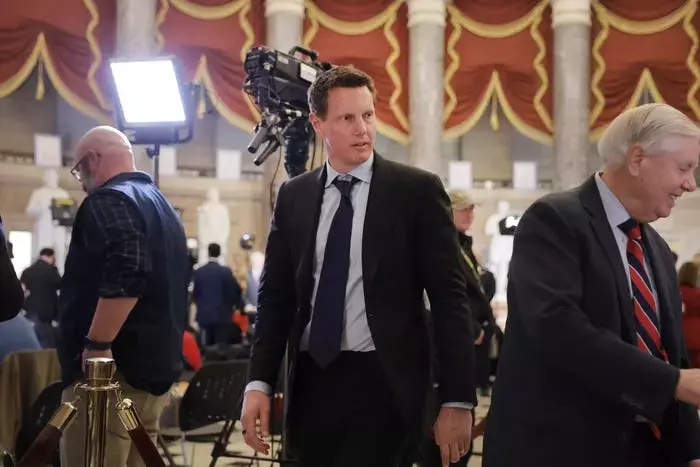
David Ellison, the CEO of Paramount Skydance, is navigating a complex political landscape as his company's proposed merger with Warner Bros. Discovery faces intense scrutiny. Following a lawsuit initiated by a dozen Democratic states, Ellison has made a concerted effort to publicly disassociate himself from partisan politics, specifically his previous engagements with former President Donald Trump. This strategic reorientation aims to underscore his neutrality and broader appeal, asserting that his political stance reflects that of the average American, embodying a mix of conservative and liberal perspectives.
Paramount CEO Redefines Political Stance Amidst Merger Challenges
In a recent New York Times op-ed published on a Tuesday in August 2026, David Ellison articulated his political philosophy, seeking to dispel speculation regarding his allegiances and intentions. He claimed his views mirror those of typical Americans, encompassing both liberal and conservative ideals. This declaration is a notable shift from his earlier actions, which included active engagement with the Trump administration to secure approval for the Warner Bros. Discovery (WBD) deal. Ellison's past interactions with Donald Trump involved attending White House events, joining UFC matches with the former president, and being present at Trump's State of the Union address, all preceding the WBD merger proposal's acceptance. These activities, coupled with his father Larry Ellison's well-known support for Trump, had drawn significant attention. Public records also show David Ellison's substantial donation to Joe Biden's 2024 presidential campaign, further illustrating a complex and seemingly bipartisan political engagement. As the WBD deal progresses to trial, Ellison emphasized the merger's necessity for Paramount to compete with tech giants like Netflix, Amazon, and Apple, arguing that the combined entity would enhance market competitiveness without undue influence over content or creators. Critics, however, contend that the merger could reduce competition and give the new company excessive power in theatrical distribution and cable TV licensing.
Ellison's careful recalibration of his public political image offers a fascinating case study in corporate leadership under intense public and legal pressure. His endeavor to position himself as politically balanced, despite a history of visible partisan engagement, highlights the delicate tightrope executives must walk when major business interests intersect with the political sphere. It prompts reflection on the extent to which personal political leanings can, or should, influence corporate decision-making and public perception, especially in industries as influential as media and entertainment. The unfolding legal battle and Ellison's narrative shift will undoubtedly be watched closely, not just for its business implications but for what it reveals about the evolving dynamics between power, politics, and media in contemporary society.