
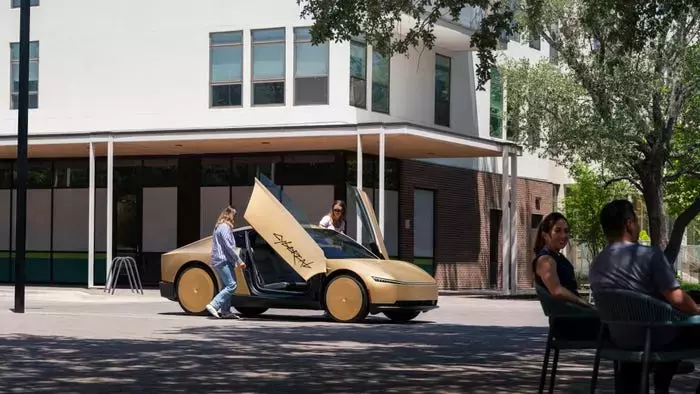
Following the recent introduction of Tesla's autonomous Cybercab service in Austin, the National Highway Traffic Safety Administration (NHTSA) has launched an audit inquiry into the vehicle's certification. This development underscores the complex regulatory landscape surrounding the burgeoning autonomous vehicle industry.
Federal Regulators Scrutinize Tesla's Cybercab Safety Claims
In a significant move on Thursday, September 4, 2026, the National Highway Traffic Safety Administration (NHTSA) announced a formal audit inquiry into the safety certifications of Tesla's newly launched Cybercab. This announcement came merely hours after Tesla commenced commercial operations for a select fleet of its Cybercabs within its robotaxi network in the vibrant city of Austin, Texas. Records from the Texas Department of Motor Vehicles indicate that 45 Cybercabs have been registered to Tesla for this purpose, though the innovative vehicle is not yet available for direct consumer purchase.
Jonathan Morrison, the esteemed Administrator of NHTSA, affirmed the agency's commitment to fostering the secure advancement and implementation of automated vehicles. However, he emphasized the federal regulator's imperative to ensure strict adherence to all existing laws and regulations. The inquiry does not, at this juncture, impose a cessation of Cybercab deployments, nor does it make any definitive pronouncements regarding the vehicle's inherent safety or compliance. Instead, the focus of NHTSA's investigation will be to meticulously review the technical data provided by Tesla and to thoroughly assess the internal processes that underpinned the automaker's self-certification of the Cybercab.
Typically, automotive manufacturers are responsible for self-certifying that their vehicles meet federal compliance standards. Tesla had previously informed NHTSA that the Cybercab conformed to all pertinent federal safety guidelines. Nevertheless, the Cybercab's design, which conspicuously lacks conventional human controls such as a steering wheel, accelerator, brake pedals, and side mirrors—features that are mandated by current federal safety standards—presents a unique challenge. This divergence from established norms raises pertinent questions regarding Tesla's interpretation and application of these regulations. NHTSA intends to ascertain the validity of Tesla's determination that certain requirements are inapplicable to its advanced automated vehicle. It is worth noting that Tesla is not the first entity to navigate the intricate waters of regulatory challenges for fully autonomous vehicles; for instance, in July, NHTSA granted a temporary exemption to Amazon-owned Zoox, permitting the commercial deployment of its own driverless robotaxis that also operate without a steering wheel.
Tesla has yet to issue an immediate response to Business Insider's request for comment on this federal inquiry. The outcome of this audit could significantly influence the regulatory framework for future autonomous vehicle technologies, potentially setting precedents for how innovation and safety standards are balanced in the rapidly evolving automotive industry.
The launch of Tesla's Cybercab and the subsequent NHTSA inquiry highlight the ongoing tension between rapid technological innovation and the need for robust regulatory oversight in the autonomous vehicle sector. This situation compels us to consider the evolving role of government agencies in fostering innovation while simultaneously safeguarding public safety. It also brings to the forefront the critical discussion around adapting existing regulations to accommodate groundbreaking technologies that challenge traditional automotive paradigms. As autonomous vehicles become more prevalent, striking a balance between enabling progress and ensuring accountability will be paramount for both industry and regulators alike.